
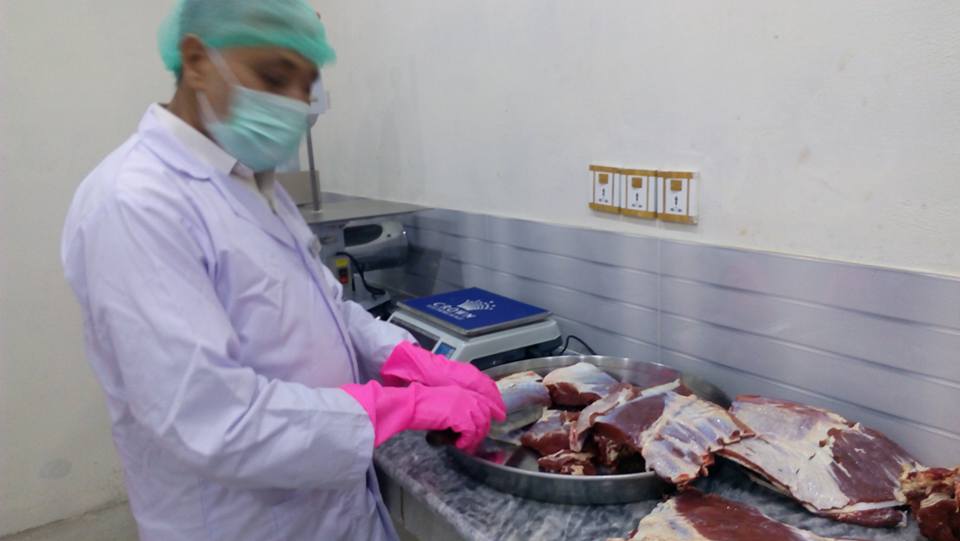
Vision: Establish a sustainable, academia–industry–community partnership for the development of an integrated halal meat value chain in Peshawar through University of Agriculture Peshawar (UAP) and Dairy Science Park (DSP) collaboration.
Role of Founding Partners: i) UAP will provide and Initial Investment of Rs 2 million and access to its dairy/poultry farm, feed mill, dairy/meat technology units and laboratory services; ii) Rs 5 million will be provided by SunSaviour (SS) as seed investment; iii) Munir Meat Company (MMC) will provide animal sheds and slaughtering facilities at Ring Road, Peshawar; iv) Habib Jan Meat (HJM) will provide their meat processing and value addition facilities at Peshawar Cantt; v) DSP will establish a Good Governance Interactive Forum, e-marketing platform, business development support and international linkages.
Business Models: Animal fattening, livestock procurement and sale, feed production, meat shops, meat supply to restaurants and domestic consumers, meat processing and packaging, livestock production, and biotechnology-based value addition.
Additional Investment: Additional investments will be invited under mutually agreed profit-loss-sharing arrangements. Human Resource Development: Honoraria will be provided to participating experts and
students in accordance with their approved contributions.
Governance: A five-member Management Committee, comprising one representative each from UAP, SS, MMC, HJM and DSP, will supervise operations under an approved agreement. This will serve as a pilot project for demonstrating feasible entrepreneurship models across livestock value chains, leading to establishment of the Center of Excellence for Dairy Science Park at UAP. The Business cum Social Services Wing will lead to the
establishment of DSP Foundation extending it to various regions within the country and across the Globe, promoting Halal Meat production..
Objective: Create a network of replicable entrepreneurship models generating employment, income, food safety, research commercialization and sustainable development across thelivestock value chain. Continue reading …