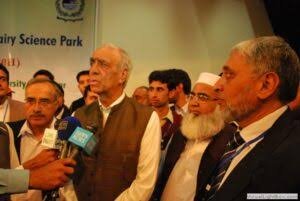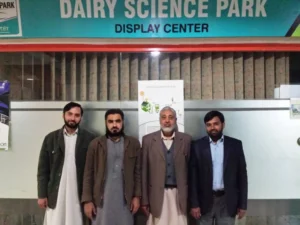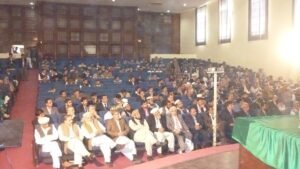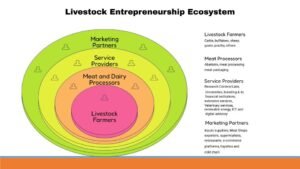
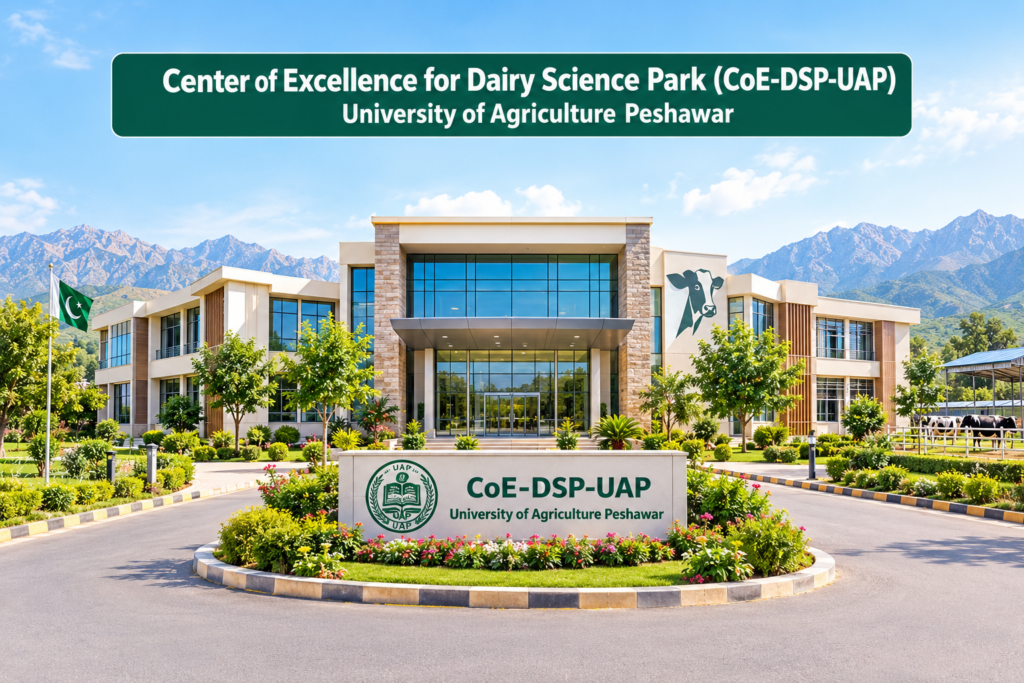
One advice of Dr Imran Khan, Vice Chacellor, University of Agriculture Peshawar (UAP), a presentation was made by Prof M Subhan Qureshi, President Dairy Science Park (DSP)/Ex-Dean FAHVS UAP, for establishing the Centre of Excellence (CoE) for Dairy Science Park at UAP.. CoE-DSP-UAP will be a sustainable institutional platform integrating research, livestock and meat value-chain development, entrepreneurship, technology transfer, quality assurance, digital
innovation, and public-private partnerships for improved food security, employment, environmental sustainability, and economic development.
CoE-DSP-UAP will operate under the institutional oversight of the University of Agriculture Peshawar, subject to approval by its competent authorities. The proposed governance mechanism will include a Management Committee and a Director responsible for executive leadership, coordination, implementation, and reporting. Appropriate financial and technical oversight arrangements will support the Director.
The Centre will comprise five functional units:
- Business Incubation Unit.
- Digital Networking, Training and Artificial Intelligence Unit.
- Livestock Entrepreneurship Development Unit.
- Quality Control, Halal and Traceability Unit.
- Postdoctoral, Biotechnology and Research & Development Unit
The functional units will coordinate the eight entrepreneurship models. Their responsibilities will be defined through approved terms of reference, work plans, budgets, performance indicators, and reporting arrangements.
The proposed financial management bylaws and University Dairy Farm Revolving Fund
Schedule will provide the basis for improving the operational continuity and financial
accountability of eligible revenue-generating units, subject to the University’s formal approval.
Expected Outcomes and Development Benefits
The proposed Centre is expected to contribute to the following outcomes:
- Improved utilization of university farms, laboratories, technical units, and research
expertise. - Stronger links between scientific research, industry requirements, and commercial
applications. - Improved access to veterinary, quality-control, food-safety, halal-assurance, and
traceability services. - New and strengthened livestock, dairy, meat, biotechnology, and allied enterprises.
- Increased opportunities for graduate employment, practical training, and
entrepreneurship. - Better coordination among livestock farmers, traders, processors, retailers, and other
value-chain stakeholders. - Improved financial management and operational continuity of participating university
units. - Increased opportunities for public-private investment and technology transfer.
- More efficient use of biological resources and reduced avoidable waste.
- Greater participation of women, youth, and small businesses in value-chain
development. - Stronger institutional collaboration and evidence-based policy engagement.
- Measurable contributions to relevant UN Sustainable Development Goals.
These outcomes will be translated into baseline indicators, annual targets, and monitoring
arrangements during detailed project preparation.